

Taking Turns
The whiplash effect of a caregiver

When you are first in a relationship, you take turns sharing your feelings for each other. You’re hesitant to open up until you know the other person will reciprocate. That flirtatious dance back and forth is, honestly, super fun.
Taking turns gets a little less exciting when adulthood kicks in. “It’s your turn to take out the garbage.” “If you unload the dishwasher, I’ll load it.” With Acts of Service being one of my love languages, I feel especially loved when my partner fixes or cleans our home.
And OH how you take turns when you have children.
(I have no earthly idea how single parents do it. Single moms and dads, you are astounding, amazing and superhuman!)
When I was breastfeeding either kid, in the middle of the night, I’d pull the baby toward me, feed her lying down and nudge Kevin if a diaper change was needed. My turn, your turn. You get in a rhythm.
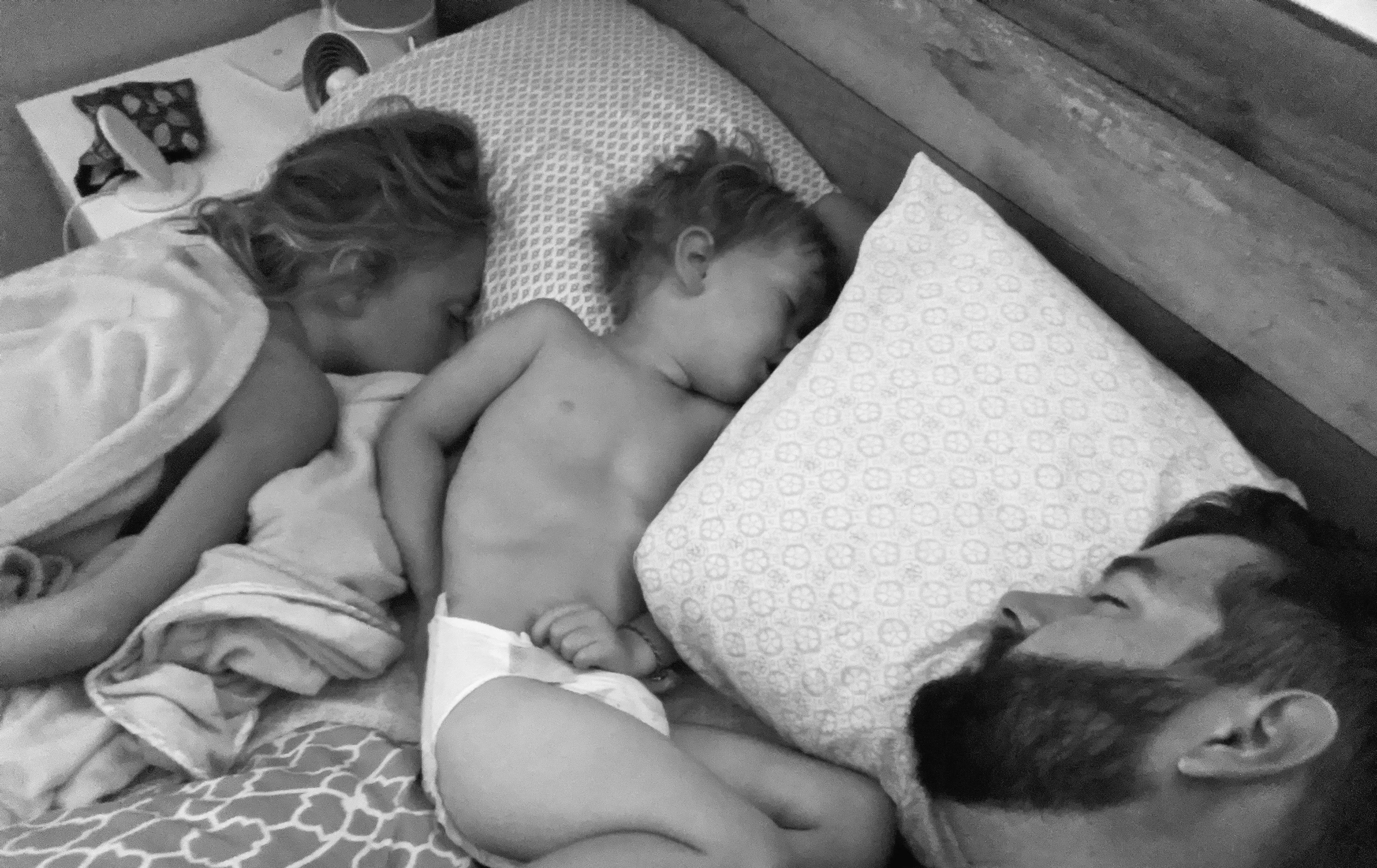
(Boob tangent : Mine produced an astounding amount of milk. I don’t know why and I don’t deserve it but I’d firehose out 20 oz in 15 minutes. It would take WAY more time to wake Kevin, warm a bottle, pump and have him feed the baby, then it would for me to breastfeed without lifting my torso or opening my eyes. As a result, I got way more snuggles and he got way more poop.)
So many days and nights, and days and nights, taking turns soothing children, feeding children, playing with children, reasoning with children.
I’d nap while Kevin played. Kevin would nap while I played. As the kids get older, we sneak away to nap but they find us and one of us has to get up. We used to rock paper scissors for diaper changes. For any type of turn now, we are just in a natural ebb and flow, each taking one for the team as we go, rarely deciding who.
It just happens. You feed the kids. I do the laundry. You do the dishes. I help with bath time. Like a three-legged race, we are tied together, hopping from my foot to yours and back.
How many times have you and I said, “I’m done. I can’t do this. Your turn.”? Or, “Wow. Just wow. Any ideas?”
As a parent, you rarely do anything for you and you are always exhausted. Taking turns is essential to survival. Again, single parents, how are you still alive?
It also helps that we aren’t outnumbered AND that we have one boy and one girl. I’ll take Cali into the women’s room; you take Ian into the men’s. I’ll comfort him while you calm her. I’ll ride next to her while you sit by him.
I hadn’t realized quite how good we had gotten at taking turns until I began having chronic pain. Until I had migraines half the days of the month with quarterly trips to the ER. Until the nerves in my teeth went haywire and decided to stay that way. Until I couldn’t process food properly through my body.
Until our daughter began to exhibit signs of significant depression and anxiety.
Until Kevin’s mental health caught up with what’s happening.
Now we just see, each day, who can hang on longer before having a breakdown. And when it hits, that person goes into our room to lose it while the other parents. And then we switch.
For example, in the last 7 days, I have gone to the ER for a migraine and had one or two emotional panic attacks triggered by pain, and Kevin has had high anxiety with emotional bouts of depression sprinkled into most of the mornings and evenings. Meanwhile, Cali has had a few anxiety attacks, too. But miraculously, I have felt good while he has felt bad, and vice versus, and we have Frogger-style hopped left, right, back and forward through the mayhem. Depending on the day, I see the next handhold or he does. It’s literally like we are playing catch with a depressive pain-made ball of anxiety.
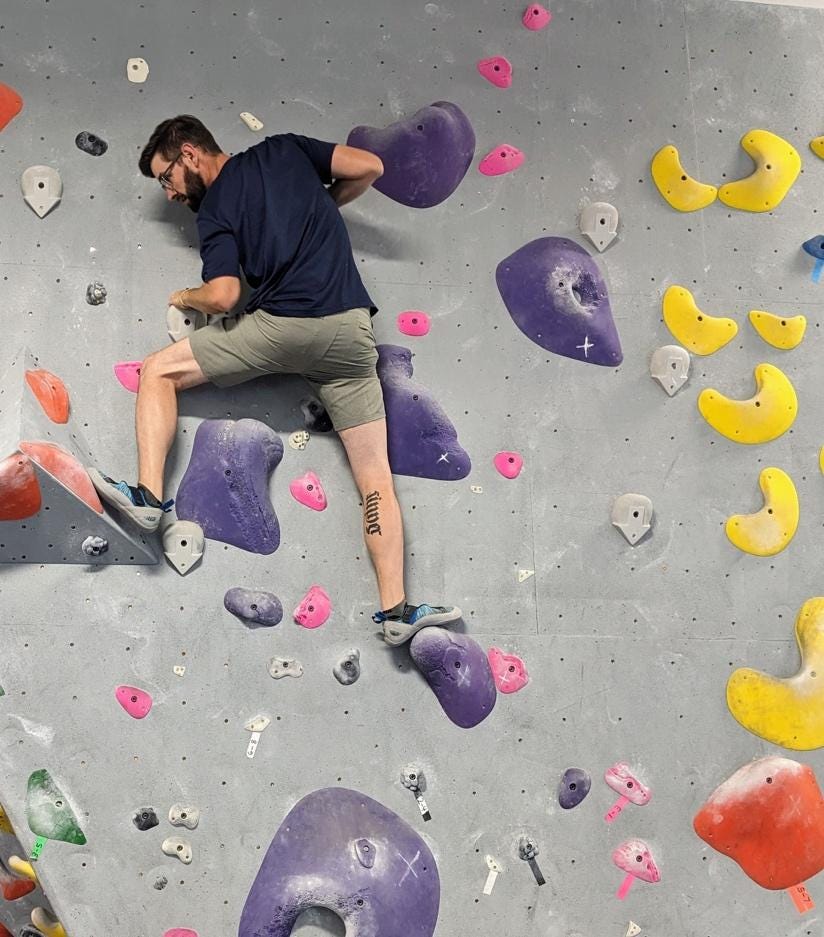
Yet we’re hanging on. Somehow. Perhaps because, well, we have to.
What has been most interesting to me through this journey is how my physical pain became a case of PTSD over time and how watching and caring for that progression has turned the whole experience into a mental trauma for Kevin, the caregiver, as well. And for Cali, a secondary caregiver. (Ian is more oblivious, but he acts out in anger at times.)
It makes sense that this would happen, yet how does it slowly and deeply infiltrate and implicate, bit by bit, pass by pass?
I feel like we are sitting in the wreckage of a car accident. Buckled into our seats. Okay, but in shock with broken glass and bent metal all around us. No one has died, but we don’t necessarily feel alive. Or, actually, we feel so uncomfortably alive that the stimulation is overwhelming.
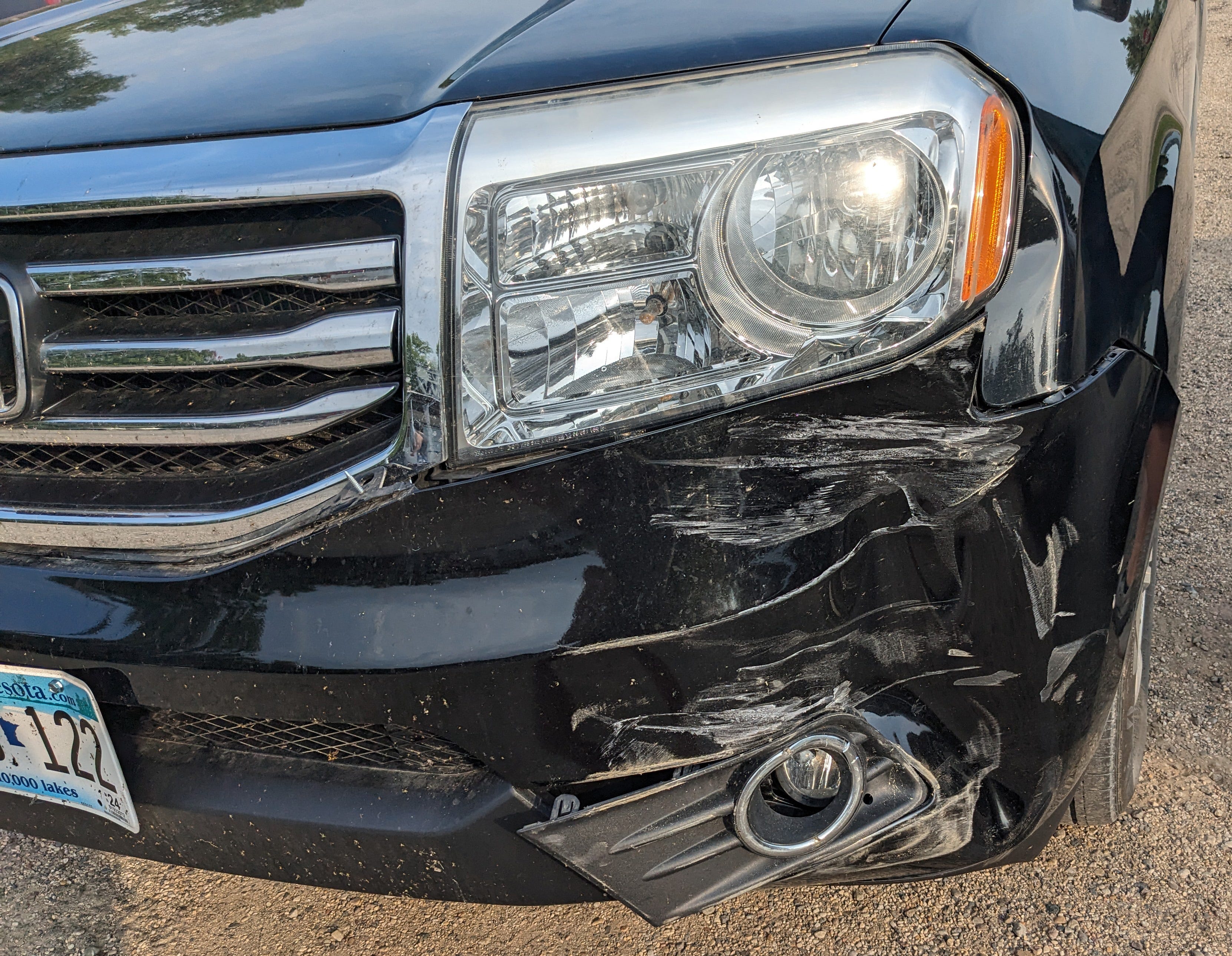
I also feel like we are months and years from that accident, now feeling the effects of whiplash as our bodies attempt to reconcile the super-speed crash that we didn’t see coming.
We’re unsettled. We’re on edge. We want to cry but can’t connect it to why. There’s too much feeling in the mind and body, followed by numbness in the mind and body.
For two and a half years, as the caregiver, Kevin has stuffed thoughts and fear and exhaustion deep inside and it’s bursting out in the form of anxiety and sadness and confusion. He has caregiver whiplash, plain and simple. But it’s not simple.
We are well-educated individuals with adequate economic means and a massive support community. And it’s hard. Really hard.
I’ll say it again: I have no idea how so many others, with less resources, keep the ball in the air.
I don’t think we talk enough about the caregiver – the one who grabs the bucket or the medicine, who drives the car, who reassures the children, who cooks the food, who speaks words of encouragement, who holds the shaking, who calls the doctor, who holds down the job, who feels helpless.
I don’t think we are trained on how to hold space for the space around the hurting. How do we mitigate the ripple effect? Whose turn matters most in this current moment? Whose turn needs support now?
We are learning to drive the car while it’s being built, whiplashed and willing.