

Living Without a Cure
Baby steps toward acceptance

[Pre-note: I will be quoting heavily from Between Two Kingdoms by Suleika Jaouad.]
At the end of the work day on Monday, I felt a deep ache in a lower tooth, third from the left (#21 to be exact), adjacent to where I had a tooth extracted on Nov. 10.
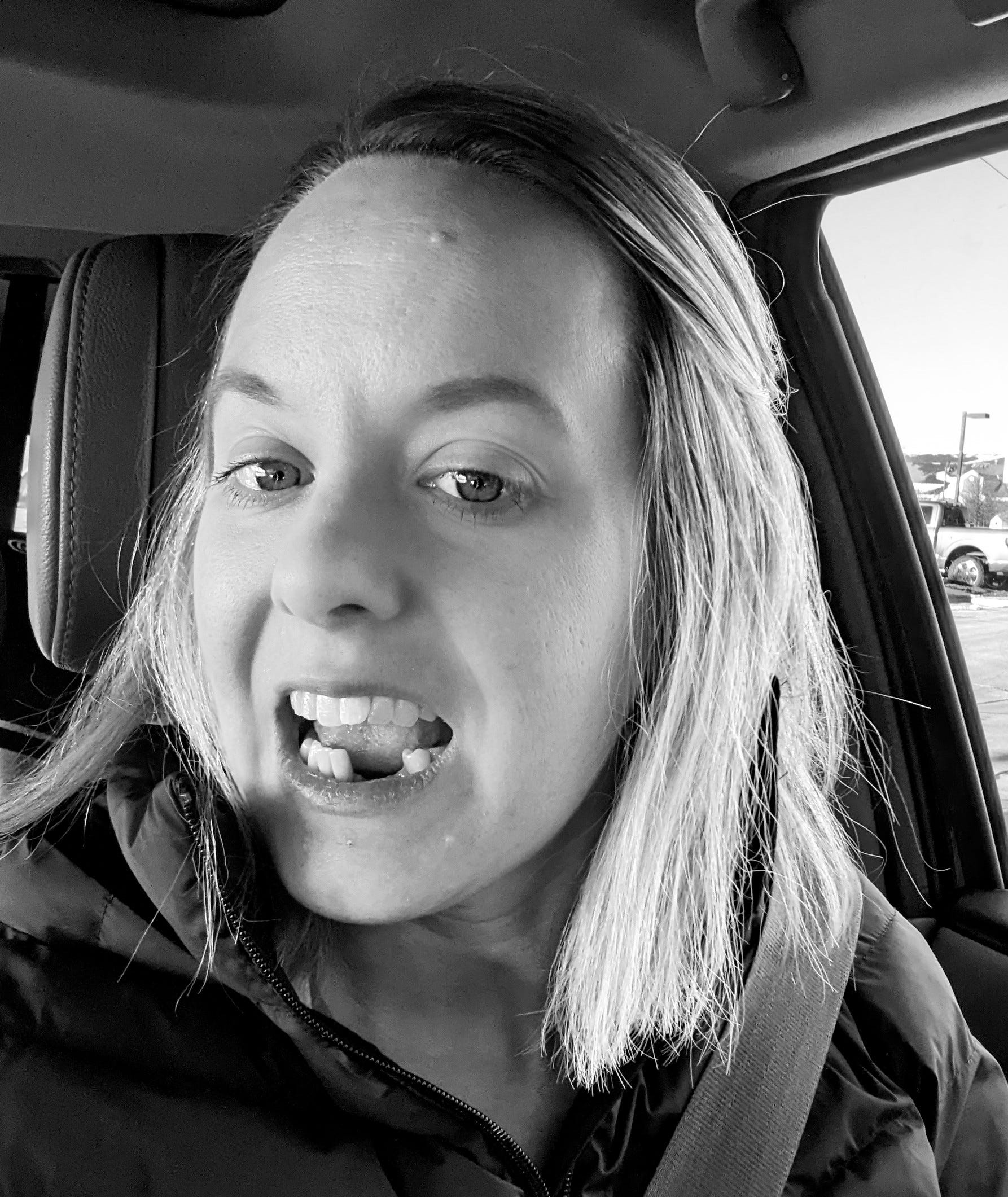
I had made it 17 days without nerve pain appearing to the left of where it was before. (After the first extraction, the pain returned a month later. After the second, it returned three days later. So I really have no barometer with which to anticipate the next step of hell or to celebrate redemption.)
Perhaps my many months of pain reprocessing therapy with a pain psychologist and my own reading about neuroplastic pain paid off, because my initial reaction was not panic. It was curious observation. Like I have now been trained to do, I asked myself, "Where is the pain? What does it feel like? Is it localized or does it migrate? If it had a shape what shape would I give it? If it had a color, what color would it be?"
Self-talking with intensity, I packed up my things and walked through the dark, across campus in the 19-degree temperature. I felt the snow on my face and focused on that sensation. I stayed calm.
I got in the car and headed to Ian's school to pick him up from his after school program. And alas, I did what I knew would break me. I called Kevin, my human signpost to emotion: "This way, this way. Turn here for utter breakdown." I voiced my fears to him and thus acknowledged that they are there.
I then sat in my car, outside of the school's front doors, sobbing and shaking. I stayed there crying for some time, until I was pushing the time threshold of when I could get Ian. And then I told myself "No. I will not let this take me over. I will not let him see me in despair again." I wiped my smeared mascara, blew my nose, stepped out of the car and went to get my son.
Soon after, I fell apart in my bedroom at home, where the kids wouldn't see me. (I am okay with them seeing me suffer. They have and they will. But they need a break from the despair.) I cried the kind of cry where only half of it is a wail. The other half is a silent gasp. (It's hard to describe but maybe those who have grieved a loved one know of the cry I mean. The tears stream, the mouth opens wide and the body shakes as if you are audibly screaming but no sound comes out.) Body crumpled on the bed then on the floor. Gripping the carpet, feeling untethered and awash in madness, pleading with God.
Kevin got home soon after me. Knowing the drill, he came into the bedroom and held me as I rocked. (Did you know that when you are in overwhelming despair, you shift your weight from side to side? I find that fascinating -- an ingrained need to be rocked like a child.)
The nerve condition that I have is not directly treatable. Sometimes there are remedies for the intensity of the pain, but there is nothing that completely removes it or prevents it from rising back up. We have tried every medication and dental approach that makes any sense and have tried some that don't make sense. I have dabbled with reiki and a Power of 8 group. I have had a Native Healer work on me. I have said all the prayers. I have meditated and worked diligently on behavioral therapies.
I know now that I will not be cured. Yet I know that I want to and must live. So how do I do that?
Last year, I read “Between Two Kingdoms” by Suleika Jaouad, who tells of her journey with leukemia -- a diagnosis that she has battled twice now. (Substack regulars, visit The Isolation Journals.) Her cancer actually returned mere months after I finished her memoir. She has had two bone marrow transplants and endless rounds of chemotherapy. She writes of the layers of reality that her mind and body have lived in throughout this journey and about the very real expedition that she made driving around the country to meet strangers that supported her writing.
Tonight, at midnight, her and her husband Jon Bastiste's documentary "American Symphony" airs.
I look forward to watching it on Netflix and really encourage you to seek it out.
The way that Suleika writes about health-related hell and hope resonates with me. I understand what she means about "days that are a slow emergency" and having "one central preoccupation: ongoingness." I feel the guilt after I lash out in anger at my family (and the situation). I feel the loss after another evening holed in my room, my kids' voices echoing from the living room. I watch both Kevin's and Cali's bouts of depression and anxiety; perhaps they are pre-conditioned to those states but my illness has sifted them to the surface. These are what she calls "Small violences. Swallowed resentment. Buried humiliations. Displaced fury. And a marrow-deep weariness at a situation that had dragged on far longer than either of us could bear.....how illness can bring you down to your most savage self."
On good (low-pain) days, I celebrate the little victories and recognize this current step as just the next step in a path forward.
On the bad (high-pain) days, I lose all sense of self and cry out to the emptiness, to God, to the ground and the sky.
Sometimes I don't want to draw attention to the victories (anything that helps) because the back wall of my mind whispers "don't get comfortable". Other times, like when I spend an evening with friends and it doesn't trigger days of pain from talking, I celebrate that I got to be myself for a bit. When I poop, I always celebrate.
On the good days, I let people tell me "God answers prayers but sometimes with 'not yet' or 'wait'". On the bad days, I think that can't possibly be a reasonable mindset. I am in tortuous pain and that is unacceptable.
I am not dying. As far as we know, this isn't a terminal condition. Processing that I have little time is not a realm I have had to enter, and I don't mean to detract from what that would be like, what others have to navigate. But I am learning, very slowly, how to accept that I might not ever again be the Me I have known myself to be. And trying to figure out how to use time appropriately, to do all the therapies that keep my body functioning and to still be the kind of mother, wife, friend and co-worker that I want to be.
For a long time, I met this nerve dysfunction head-on with rigorous determination. I made appointment after appointment. I told my story to doctor after doctor after doctor. I advocated with my ability to articulate myself well and fought for listening ears and compassionate caregivers.
Now I cannot count the treatment plans we have tried. And I am entering a new stage of chronic pain -- a quieter one, where I achingly wrestle with the fact that I can't keep holding off on life, waiting until I get better.
When I am not in pain, I'll read to the kids every night. When I'm not in pain, I'll laugh so much more. When I'm not booked solid with appointments, I'll carve out time to write. When I feel like Me again, I'll feel like I'm living again. But there is no finish line. I can't burn or carve out this pain, though I'm still trying the latter. This is not a surgery to steadily heal from, the tissues fusing back together. This is not a mental state that the right mix of meds will stabilize.
This is my new life.
And "as months bled into years, I'd adapted to the mores of this new land as best I could, befriended its inhabitants....In its terrain, I'd built a home, accepting not only that I might stay there for a while, but that likely I would never leave." (Suleika Jaouad)
When we were lying in bed last night, Kevin said, "If your pain was gone tomorrow, your fear would not be." And he is right. I live in an almost constant state of fear, like a person with a tazer is following me, like I have the cloth over my face and the water might pour over at any moment.
It makes sense. Pain is torture. My mind is warped by it.
"When the body betrays you again and again, it obliterates whatever nascent trust you've restored in the universe and your place in it. Each time, it becomes harder to recover your sense of safety. After you'd had the ceiling cave in on you...you don't assume structural stability. You must learn to live on fault lines." (Suleika Jaouad)
How can my mind re-mold this?
Largely, I find new shapes by reading how others have impossibly clambered through hells I can't 'imagine. I recognize my experience in parts of theirs and use their words as bricks to re-form what's next, to have a linguistic way to express my new self into being.
Damn, Suleika explains it well: "Putting pen to paper was what allowed me to hold on to a sense of self even as I deteriorated -- even when I no longer recognized myself in the mirror. It gave me the illusion of control when I'd had to cede so much of it to caregivers. Trying to rend the experience in words made me a better listener and observer of not only others, but also the subtle shifts in my own body....Reporting on my experience granted me a way to transmute suffering into language. It also created a community."
Honestly -- and you know this -- writing is largely a selfish need for me to purge the pain from my body, to leak it into language. I feel like I'm suffocating when the thoughts lay on my lungs too long. Now, after my public lament, how will I re-read my own experience?
Can I get to the point where my body's limitations are not a frustration but a chance to enjoy the rest I am forced (honored? thankful?) to take? Can I write of the joys that were only made possible by the despair? Can I view myself as fully living when I'm somewhere between sick and well? "...how porous the border is between the sick and the well....The idea of striving for some beautiful, perfect state of wellness? It mires us in eternal dissatisfaction, a goal forever out of reach. To be well now is to learn to accept whatever body and mind I currently have." (Suleika Jaouad)
An almost insurmountable undertaking: Be Me with the pain still there. In the season of Advent, that of waiting, I need to learn how to not wait anymore to be well.
Can I do this? (I'm a mother. I have to do this.)
Lord, give me strength. Give me sass. Give me safety. Give me solace. Give me a shape to what this will be.